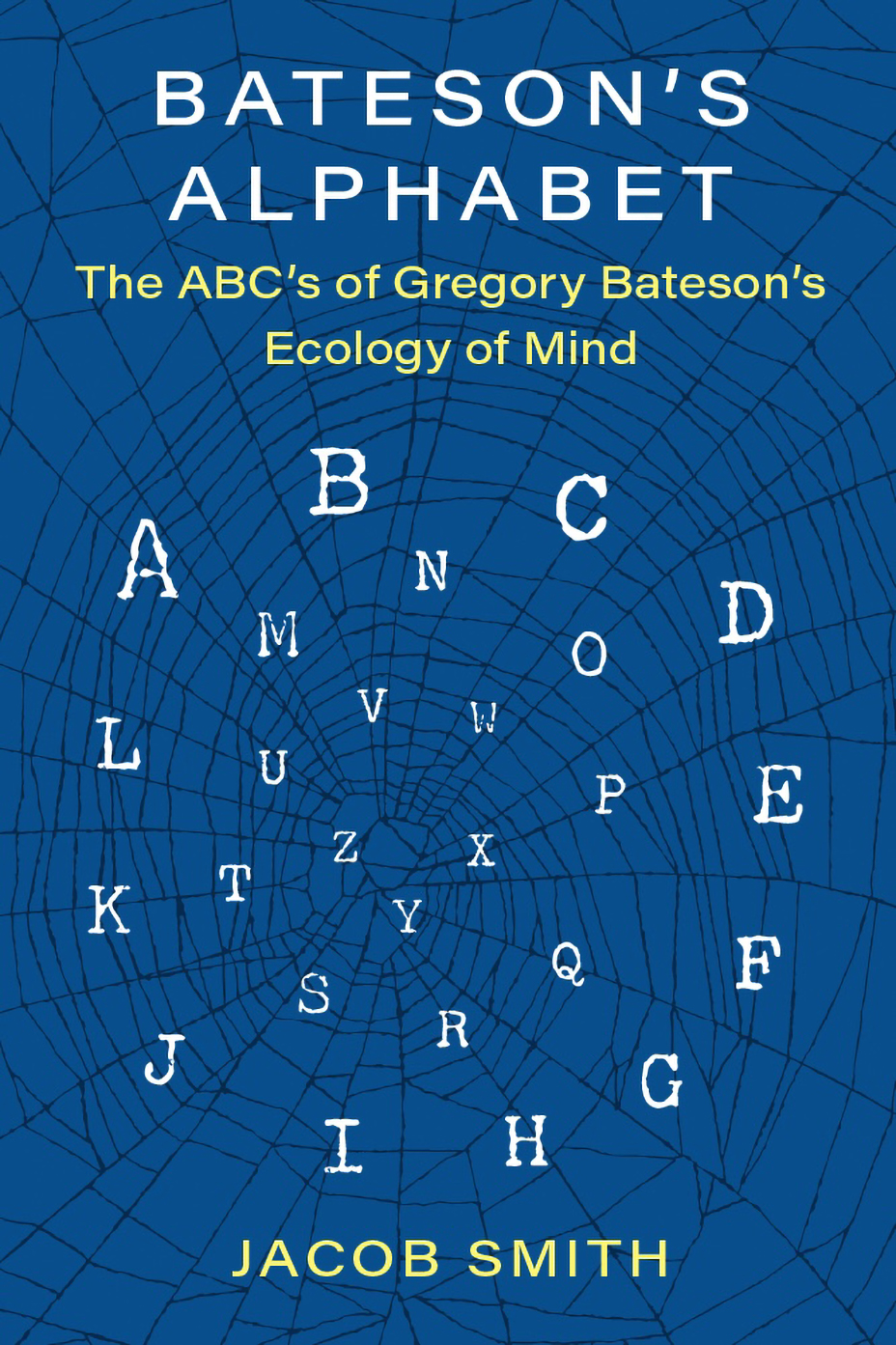
Jacob Smith, Bateson’s Alphabet: The ABCs of Gregory Bateson’s Ecology of Mind; Jacob Smith, “David Lynch Presents William Blake’s The Sea of Time and Space”
DOI:
https://doi.org/10.47761/biq.407Keywords:
Ecocriticism, Media studiesAbstract
William Blake’s legacy continues to inspire writers, poets, artists, and thinkers. His declaration that “[i]f the doors of perception were cleansed every thing would appear to man as it is: infinite” is not only a poetic aphorism but also an epistemological proposition that rests upon the interconnectedness of seemingly disparate worlds. His artistic cosmology, built upon a fusion of contraries, anticipates many of the core ideas developed by Gregory Bateson, whose concept of an “ecology of mind” is based on similar foundations of interconnection, paradox, and aesthetic perception. Bateson’s ideas and theories are revisited by Jacob Smith—a scholar in media studies, sound studies, and ecocriticism—in his hyperlinked book Bateson’s Alphabet: The ABCs of Gregory Bateson’s Ecology of Mind, which challenges media borders and connects words and ideas to voice and images. The progeny of this book is Smith’s intermedial video essay that recontextualizes Blake’s painting The Sea of Time and Space through the immersive soundscape of David Lynch. Smith’s closely interwoven works—his open-access book and his video essay—are two sides of the same scholarly coin, with one deconstructing Blake through Bateson’s ecology of mind and the other reconstructing the Blakean artistic legacy through Lynch’s soundscape.
 Please consult our
  When the Blakes lived on South Molton Street, who were their neighbors? Angus Whitehead goes door to door.